“Is growth on TikTok actually skill, or is early momentum everything?” This is one of the most debated questions among creators, and the answer is more nuanced than most guides admit. This article breaks down how TikTok’s algorithm actually evaluates new content, why the first hour matters more than most creators realize, and what the relationship between skill and momentum really looks like in practice.
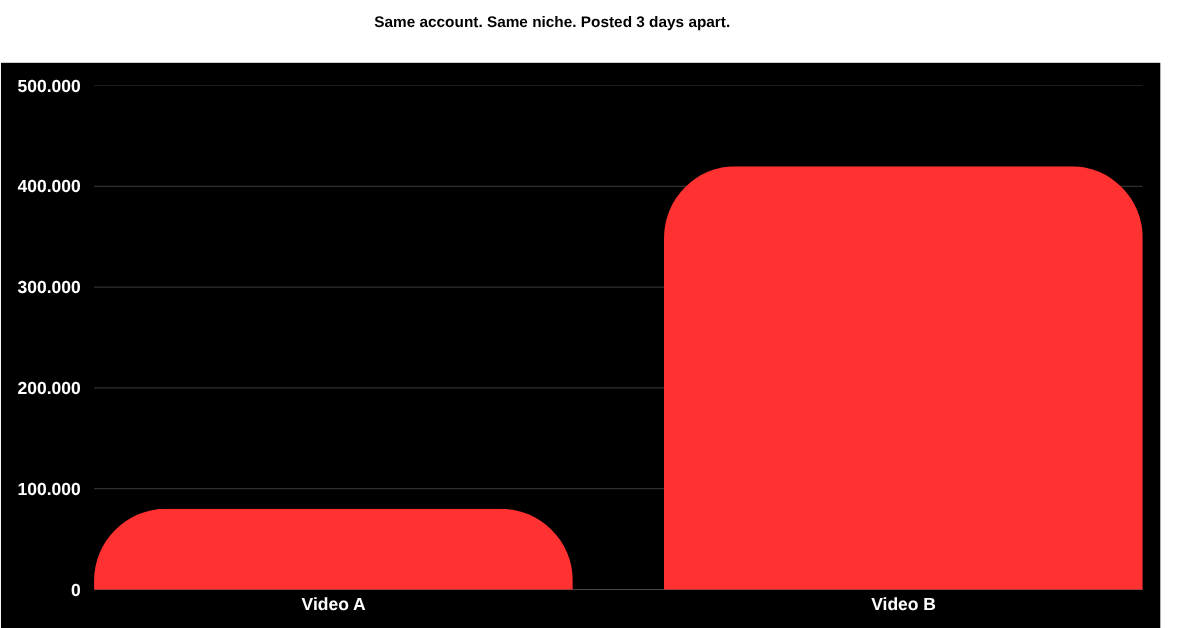
You’ve probably seen it happen: two videos, nearly identical content, posted days apart from the same account. One hits 420K views. The other barely reaches 80K. No obvious difference in quality, caption, or timing.
So what actually determines whether a TikTok video takes off? Is it the creator’s skill, the hook, the edit, the sound choice? Or is it something more unpredictable: which small audience TikTok happened to show your video to first?
The honest answer is both. But the order in which these factors operate matters more than most creators realize.
What Early Momentum Actually Means on TikTok
When you upload a video, TikTok doesn’t immediately push it to your entire follower base or broadcast it to a broad audience. Instead, it runs a quiet experiment. Your video gets shown to a small test pool, typically a few hundred to a few thousand accounts, and the platform watches closely how they respond.
The algorithm measures several signals during that first window:
- Watch time and completion rate: the share of viewers who push past the first three seconds and watch to the end.
- Rewatches: the number of viewers who loop the video more than once.
- Shares and saves: signals of genuine value, weighted heavily in the ranking model.
- Comments and likes: engagement velocity across the test window, not just total volume.
If the test pool responds well, TikTok expands distribution. If not, the video quietly stalls, regardless of how well-crafted it is.
This is why the same video can produce wildly different results when uploaded on separate occasions. The content didn’t change. The test audience did.
Early momentum isn’t just helpful here; it’s the gating mechanism. Without a strong signal from that first audience, skill becomes invisible. The algorithm simply never gives the video a chance to prove itself to a wider pool of viewers. Some creators accelerate this initial signal by boosting early TikTok views, giving the algorithm stronger data to work with from the start.
Does Skill Actually Matter on TikTok
Yes, but skill operates one level up from views. Rather than directly causing reach, it increases the probability of generating momentum. A creator who understands hooks, pacing, and sound selection isn’t guaranteed virality, but they are building a reliable edge with every upload.
Think of it this way: the algorithm decides who sees your video next based on how the current audience responds. Skill is what shapes that response. A strong hook keeps people watching past the first three seconds. The right trending sound improves discoverability. Tight editing keeps retention rates high. These aren’t abstract creative qualities; they directly feed the metrics TikTok uses to decide whether to expand reach.
Skilled creators don’t bypass the momentum requirement. They generate it more consistently, across more videos, with more reliability. That consistency compounds over time, but it requires an account history that a brand-new creator simply doesn’t have yet.
Why New Accounts Face a Structural Disadvantage
A creator with an established audience has a buffer that new accounts simply don’t have. When TikTok runs its initial test, it draws on signals from previous videos: does this account typically hold attention? Do its followers actually engage? An account with a track record of strong performance tends to receive a more favorable starting pool.
A brand-new account, or one that has posted inconsistently, starts without that historical data. TikTok has no performance history to draw from, so the initial test pool becomes more unpredictable.
This is the structural reason why early social proof matters beyond mere vanity metrics. A video that already has views signals to new viewers, and to the algorithm itself, that others found it worth watching. Views and followers serve different functions in this equation: views drive algorithmic reach, while followers determine your baseline audience for future content. Both matter, but at different stages of growth.
Getting onto the For You Page, in other words, is a compounding process. Account history, content quality, and early signals all feed into the same outcome, which means the order in which creators develop these elements matters more than any single factor alone.
Why Skill Must Come Before Momentum on TikTok
This is where many creators get the order wrong. They focus entirely on volume: posting more, testing more hooks, without building the underlying skill that makes momentum sustainable.
Momentum without skill leads to one-hit videos. The audience that arrives from a viral moment leaves quickly if subsequent content doesn’t hold up. The algorithm notices the drop-off in engagement and pulls back distribution accordingly.
Skill without momentum leads to invisible content. Technically excellent videos that never reach enough people to trigger the expansion threshold simply go unseen. Creators who scale consistently are doing both: developing the craft that sharpens their edge with every upload and finding ways to seed initial momentum so the algorithm has strong data to act on before the gate closes.
What This Means for Your Content Strategy
If you’re starting from zero or relaunching on TikTok, a few practical implications are worth keeping in mind.
Your first five to ten videos carry disproportionate weight. They shape TikTok’s early read on your account, so treat them as high-effort experiments rather than throwaway tests.
Post timing still matters, not because the algorithm cares about the clock, but because your initial test audience should consist of people who are actually online and likely to engage.
A video that stalls in the first few hours rarely recovers on its own. Momentum compounds, but it needs an initial spark to ignite.
Frequently Asked Questions
Does TikTok favor accounts that post consistently?
Consistency helps build account-level signals over time, but the algorithm evaluates each video largely on its own merits during the initial test window. Consistent posting increases your at-bats, not the quality of any single pitch.
Should I delete and repost a video that stalled?
Some creators report success reposting videos that stalled, particularly when the initial test audience was small or poorly targeted. It’s worth testing on content you believe is strong, but it’s not a reliable strategy for every video.
How long does TikTok’s initial test window last?
There’s no official figure, but most evidence points to the first 30 to 60 minutes after posting as the critical window. A strong burst of engagement in that period is the clearest signal that a video will receive wider distribution.
Can a video go viral days after it was posted?
Yes, occasionally, particularly if a larger account comments on or shares it and injects new momentum. Most videos that don’t generate early signals, however, won’t recover without that kind of external catalyst.