The role of followers in social media growth has changed significantly in recent years. While follower count once defined influence across every platform, modern algorithms distribute content in very different ways depending on where it is published.
Social Graph vs Interest Graph
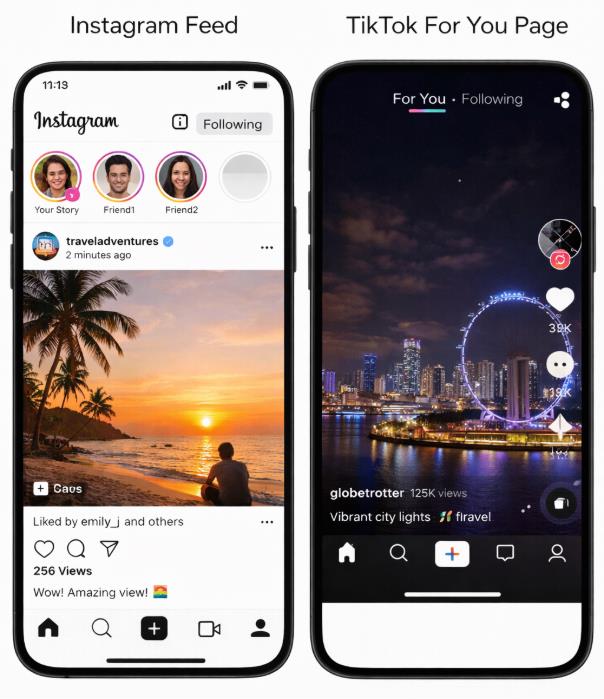
To understand how followers function on each platform, it is essential to examine how content is distributed. Instagram is largely built on a social graph model. This means the platform considers relationships and follower connections as part of its distribution logic. Who follows whom still influences who sees what. TikTok operates primarily on an interest graph model. Content is distributed based on behavioral signals such as watch history, interaction patterns, and content similarity rather than direct follower relationships. This structural difference fundamentally changes how much followers influence reach.
How Instagram and TikTok Use Followers
On Instagram, followers continue to play a meaningful role in early distribution. When a post is published, Instagram typically shows the content to a portion of the account’s followers first. The platform then measures early engagement signals including likes, comments, shares, and saves. Based on those signals, it decides whether to expand distribution beyond the initial audience.
In this system, followers act as the first exposure layer. If that first layer responds positively, the content may reach non followers through Explore, Reels discovery, or suggested posts. If followers do not engage, reach often remains limited. Followers do not guarantee visibility. However, they influence early performance signals, which directly affect broader distribution. TikTok’s system works differently. When a video is posted, it is typically distributed to a small audience first. This audience may include users who have shown similar behavioral patterns or interacted with related content. This distribution often occurs regardless of follower count.
Many TikTok accounts with very few followers regularly achieve high view counts. At the same time, large accounts sometimes experience low reach if their content fails to perform during early testing phases. Followers on TikTok matter less in initial distribution compared to Instagram. The platform prioritizes metrics such as watch time, completion rate, replays, and interaction velocity. Followers can contribute to engagement, but they are not the primary driver of exposure.
Stability and Predictability
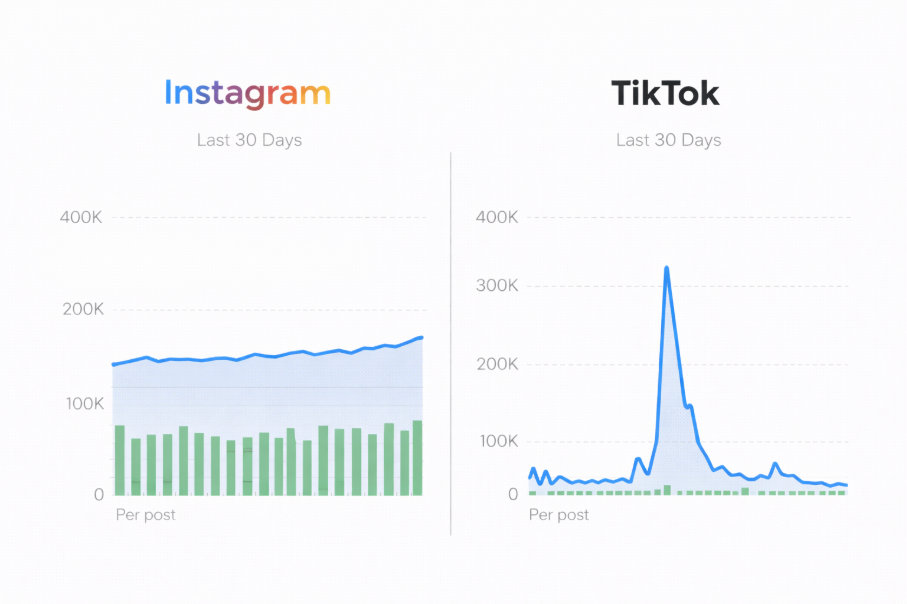
Another important difference between Instagram and TikTok lies in content stability. On Instagram, a strong follower base provides a degree of predictability. Even if reach fluctuates, accounts with engaged followers often maintain a consistent baseline of visibility. Followers can stabilize performance during algorithm shifts or changes in discovery features.
On TikTok, performance is more volatile. Viral reach can happen without followers, but visibility can also drop suddenly regardless of account size. The discovery first model reduces dependency on follower count but increases unpredictability.
Follower Dependency and Its Strategic Implications
If we compare follower dependency directly, Instagram relies more heavily on follower relationships during early distribution. TikTok relies more heavily on behavioral signals and content testing. On Instagram, early distribution is influenced by followers. On TikTok, early distribution is influenced by interest based testing. Viral potential without followers is moderate on Instagram but high on TikTok. Stability from a follower base is stronger on Instagram and weaker on TikTok. Discovery driven reach is hybrid on Instagram and dominant on TikTok. Instagram still integrates followers into visibility logic. TikTok prioritizes interest and engagement signals.
Engagement vs Follower Size
On both platforms, engagement quality matters more than raw follower count. However, the weight of followers differs significantly. On Instagram, engaged followers increase distribution probability. Strong early interaction improves expansion into Explore and suggested feeds. On TikTok, engagement performance outweighs follower base in most cases. A video that generates strong watch time and completion metrics can scale widely even if the creator has a small following. Inactive followers can reduce reach on Instagram by weakening early signals. On TikTok, inactive followers have less impact because discovery audiences dominate overall exposure.
Growth Strategy Differences
Understanding each algorithm structure changes how creators should approach growth. On Instagram, building a relevant and engaged follower base improves early signal strength, repeat exposure, and long-term community development. For accounts looking to strengthen that early layer, some creators choose to build an Instagram following strategically before organic growth takes hold. Follower growth and engagement should develop together. On TikTok, content experimentation and performance optimization matter more than follower count alone. Accounts can scale rapidly through strong content without first building a large audience. Followers accumulate as a result of content performance rather than acting as a prerequisite for reach. This difference affects how creators allocate effort. Instagram growth often requires nurturing audience relationships. TikTok growth often requires testing content formats aggressively.
Monetization Implications
Follower importance also differs in monetization contexts. On Instagram, brands frequently evaluate follower count, engagement rate, and audience consistency when assessing partnerships. Follower size still contributes to perceived authority and negotiating power. On TikTok, brands often focus more heavily on average views per video, performance consistency, and audience demographics. A creator with moderate followers but strong average views may be more attractive than a large account with inconsistent reach. Instagram monetization still leans more heavily on follower metrics. TikTok monetization leans more heavily on performance metrics.
Psychological Perception
Despite algorithmic differences, perception still plays a role. Follower count influences how new users judge credibility on both platforms. However, visibility of follower numbers differs in user experience.
On Instagram, follower count is prominently displayed and socially emphasized during profile visits. On TikTok, most content is consumed through the For You feed before users check profiles. This reduces the psychological weight of follower numbers compared to Instagram.
When Followers Matter More or Less
Followers tend to matter more when long term brand building is the goal, repeat visibility is important, community engagement is central, and predictable exposure is needed. These conditions align more closely with Instagram’s ecosystem.
Followers matter less when discovery is primarily algorithm driven, content performance dominates distribution, and viral reach is the main objective. These conditions align more closely with TikTok’s structure.
Strategic Takeaway for Creators and Brands
Followers do not carry equal weight on Instagram and TikTok. Instagram integrates followers into early distribution and long term stability. TikTok prioritizes behavioral signals and content performance over social connections. In practical terms, Instagram rewards engaged follower communities. TikTok rewards high performing content regardless of follower size.
The most resilient growth strategy adapts to the structure of each platform instead of applying identical follower expectations everywhere. Understanding this distinction allows creators and brands to build smarter, platform specific strategies rather than chasing numbers without context.
FAQs
Do I need many followers to go viral on TikTok?
No. TikTok distributes content based on performance metrics such as watch time and completion rate. Accounts with few followers can still achieve high reach if content performs well during early testing.
Are followers still important on Instagram in 2026?
Yes. While discovery features are strong, Instagram still uses followers for early distribution signals. Engaged followers improve expansion probability into Explore and suggested feeds.
Which platform is better for long term community building?
Instagram generally offers more stability for community development because follower relationships play a larger role in visibility. TikTok is stronger for discovery and rapid exposure but less predictable.
Should brands focus more on followers or views?
It depends on the platform. On Instagram, both follower count and engagement rate remain relevant. On TikTok, average views and content performance metrics often matter more than raw follower size.